It’s morning. The sun is barely up, your eyes are heavy, and almost by instinct, your hand reaches for your phone. Notifications light up the screen. Just a quick look, you tell yourself. But one message leads to a scroll, and before you know it, nearly an hour has passed.
Your day has barely begun, and already, your mind is filled with fragments of other people’s lives, work messages, and whatever the algorithm decided to offer overnight. And somewhere in that blur, you wonder, where did my own time go?
Just a few years back, the average time we spent on our phones each day was 2 hours and 56 minutes. Today, it’s crept up to 3 hours and 46 minutes – a 23% increase in just four years. And the number of times we reach for our phones has jumped, too – an average of 96 times a day. What once took seconds, small checks here and there, has turned into something that rules our days, our minds, and even how we experience life itself.
In our one-on-one Mental Health counselling sessions, students often share feelings of overwhelm, anxiety, and depression, struggling to focus. Yet, as we dig deeper, it’s rarely the surface challenges causing this – it’s often addiction to things like smartphones, relationships, or other, quietly draining their energy and leaving them unable to address the real issues.
Addiction, as Judith Grisel explores in Never Enough, isn’t only about substances. It’s about filling ourselves with quick hits that never truly satisfy, leaving us emptier than before. And smartphones have come to embody this cycle. Our minds thrive when they’re engaged, when they’re challenged to remember, imagine, or simply be. But screens erode this potential, chipping away at the mental muscles we once naturally flexed.
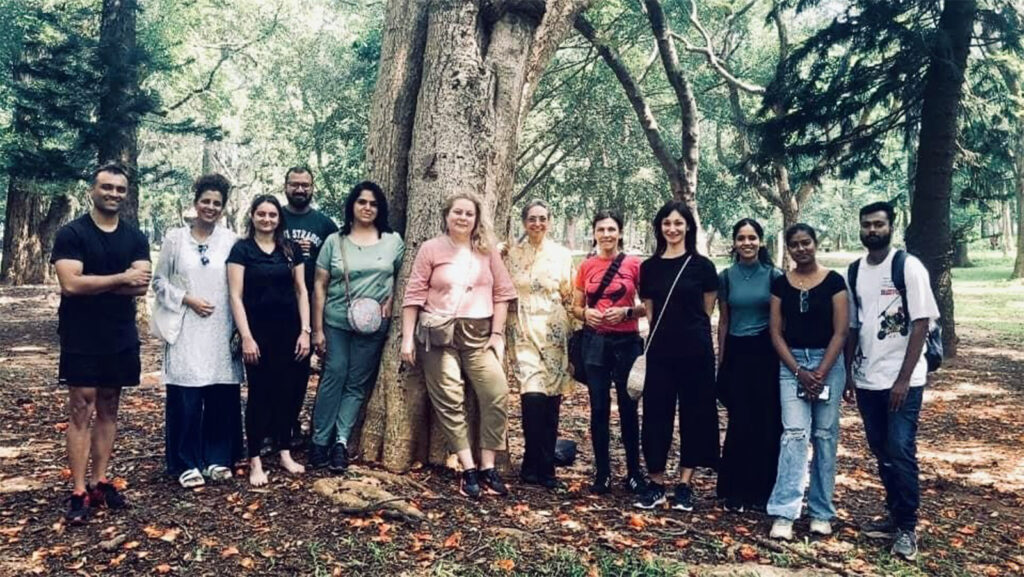
Yesterday, during a walking meditation in the park, I watched this firsthand. A group of corporate professionals joined me. Initially, you could sense the tension – but as we walked and listened to the guided meditation, something remarkable began to happen.
One by one, they started to soften, to notice the small things they’d overlooked for too long. They felt the sun warming their faces, noticed the leaves rustling overhead, even the rhythm of their own breathing. By the end, the confessions poured out. They spoke of how disorienting, yet liberating, it felt to disconnect, to escape what some called “corporate slavery.” They shared how they’d become so accustomed to constant doing that they’d forgotten how to just be. And as they walked, side by side, they experienced a rare moment of presence – fully alive, here, and free.
It’s strange to realize that this kind of connection, this freedom, has become foreign to us. In 2019, we already spent hours each day on our phones, but now, the numbers keep climbing, the screens keep calling, and we find ourselves more disconnected from ourselves and others.
As I hear these stories from both my students and those professionals, I’m reminded of how these screens, for all their conveniences, often stand in the way of our simplest joys and deepest connections. Each “just a quick check” pulls us further away from the moments that truly matter, and we end up losing so much more than we gain.
So, what do we do from here? Perhaps it’s not about a grand gesture or a radical detox. Maybe it starts with something as small as a mindful choice – to step outside, leave the phone behind, and reconnect with the world. To feel the sun on your skin, hear your own footsteps, listen to your own thoughts. One moment at a time, reclaiming what’s ours until, eventually, we’re back to ourselves – the self we used to be before the screens took so much away. Yesterday’s walk in the park reminded us all that freedom and presence don’t require grand gestures. They start with a few simple steps, a pause, a breath, a chance to remember who we are when we’re truly, fully here.